Blockchain beyond Bitcoin and crypto: the case for a trust registry

This article was originally published as an op-ed on IOL on July 28, 2026. IOL is a leading aggregation platform for news, current affairs and content in South Africa. 

Bitcoin, the digital currency that had its genesis in 2009, is often confused with blockchain technology. However, Bitcoin is not blockchain, and blockchain is not Bitcoin. Although related, the difference between Bitcoin and blockchain is not subtle. The textbook definition of blockchain states that “it is an immutable ledger that allows transactions to occur among parties in a decentralised fashion, with a mechanism to reach consensus on the shared state of the ledger”. Simply put, blockchain is a distributed “database” that is not managed by a central entity, is accessible to any interested party and records timestamped data exchanges between two transacting parties in an append-only and tamper-evident “audit-trail style log”. The append-only property implies that timestamped data entries can only be added to the log and cannot be modified after the fact. Related to this, the tamper-evident property stems from the use of cryptographic (i.e. advanced mathematical) checks and balances to flag attempts to modify data entries by a malicious actor after the data has been posted to the ledger.

Bitcoin and cryptocurrencies

Therefore, Bitcoin and most cryptocurrencies (crypto) are better classified as applications that are built on blockchain technology, analogous to how email and the web are internet applications. More specifically, Bitcoin is a cryptocurrency – a digital currency that is minted (issued) on the blockchain, and whose supply is managed by an algorithm and not a centralised entity (i.e. a central bank) as is the case for traditional government-issued currency. A Bitcoin transaction can be thought of as a data exchange specifying the number of (Bitcoin) units that have been transferred between two parties (a sender and a receiver) and inscribed in the timestamped audit-trail style log for all to see. Considering that the timestamped audit-trail style log is recording an exchange of data, it follows that it can also be used for data exchanges in other domains beyond financial services, where there is a need for a single source of truth, such as supply chains.

Blockchain as a trust registry

Beyond bitcoin and crypto, blockchain has utility as a shared trust registry in multi-stakeholder environments such as supply chains. A blockchain-enabled supply chain comprises a distributed system that uses blockchain to collect, securely store and attest to key information for a product throughout its lifecycle. The network of interconnected supply chain actors and firms then has access to a single source of truth, which is append-only and tamper-evident. This improves transparency, reduces fraud, enhances end-to-end tracking (traceability) and streamlines operations. This notion of a shared trust registry has multiple applications, such as tracking and tracing food supply chains from farm-to-fork; identity management, creating and maintaining land tenure rights; measuring, reporting and verifying (MRV) emissions and tracking product source and operational data via digital product passports (e.g. battery passports).

Adoption of blockchain solutions for non-crypto use cases

However, the global consensus on the adoption of blockchain solutions for non-crypto (non-financial) use cases is that it is hampered by both technical and non-technical factors. These include – the lack of availability of skilled technical resources to implement these solutions, complex and costly infrastructure requirements, lack of buy-in from management, reliance on existing legacy systems, environmental concerns and regulatory uncertainty.  Within a South African context, this is affirmed by research from the University of Cape Town’s (UCT) Information Systems department on blockchain adoption in Johannesburg-based small, micro and medium enterprises (SMMEs). This research identifies process compatibility, trading partner pressure, technical complexity, top management support, perceived benefits and organisational readiness as significant factors that impact the adoption of blockchain solutions. Further, while off-the-shelf enterprise blockchain solutions are available on the global market, they often lead to vendor lock-in due to proprietary data formats, restrictive contracts and high switching costs. In addition, off-the-shelf enterprise blockchain solutions often require significant upfront capital expenditure, are not tailored for local contexts (one size does not fit all) and do not always satisfy digital sovereignty requirements.

CSIR BlockAPI Blockchain-as-a-Service

To address these challenges affecting the adoption of blockchain solutions and promote the adoption of blockchain within SMME’s, academia and more broadly in the South African private and public sector, the Council for Scientific and Industrial Research (CSIR) has developed the BlockAPI Blockchain-as-a-Service (BaaS). This is a lightweight managed blockchain API platform that allows writing and verifying of data to the blockchain, for example, supply chain data. The BlockAPI BaaS enables SMMEs to short-circuit the steep learning curve associated with blockchain technology and cost-effectively integrate the technology into their existing business processes without the need to create, deploy and manage their own blockchain infrastructure. The benefit of seamlessly embedding a blockchain trust registry alongside existing systems without needing to replace them lowers both the barriers to adoption and financial investment required and increases the likelihood of management buy-in.

The benefits derived from using the BlockAPI BaaS include:

  • Simple and low-cost write access to data to the blockchain via an API;
  • The ability to confirm the integrity of data audit trails via an API;
  • Integration with existing and legacy systems and business processes; and 
  • Blockchain integration without vendor lock-in. 

BlockAPI BaaS in action

BlockAPI BaaS is currently at technology readiness level 6 and has been demonstrated in South African logistics, manufacturing, agriculture and financial services value chains. The demonstrations in different verticals, which highlight its simplicity and ease of integration, include: 

  • A CSIR Cold Chain Track and Trace platform that uses an internet-of-things (IoT) sensor box attached to a cooler box for tracking temperature and GPS location of medical specimens between health care facilities and diagnostic facilities (i.e. health care and logistics sectors). 
  • A CSIR Greenhouse Gas Observatory platform for securely monitoring emissions, piloted within an aluminium foundry (i.e. the foundry sector). 
  • The CSIR ILIMA supply chain platform, which is used by smallholder farmers to manage poultry production (i.e. the agricultural sector).
  • Postgraduate research projects at UCT, including one on environmental, social and governance (ESG) reporting by financial institutions and another on medical specimen transportation (i.e. academia).

Blockchain-based digital public infrastructure

In today’s world, where digital transformation is a source of competitive advantage and economic growth, the provision of digital public infrastructure (DPI) is a priority to accelerate participation by firms and citizens in the digital economy. The design, implementation and deployment of BlockAPI BaaS as an API-first and cloud-native trust registry service to promote adoption of blockchain in environments where data trust is critical (such as for supply chains), aligns with the ethos of DPI. Considering that BlockAPI BaaS is sector-agnostic, given the earlier-mentioned use cases, it also has the potential to be positioned as DPI for SMMEs and academia.

Key takeaways

Firstly, Bitcoin is not blockchain, and blockchain is not Bitcoin. Secondly, beyond Bitcoin and crypto, blockchain – the “timestamped, distributed, audit-style log” – provides a trusted data registry in environments that depend on tamper-proof data. Lastly, the BlockAPI BaaS platform works extremely well in supply chain solutions. BlockAPI BaaS enhances supply chain transparency, traceability and efficiency across different sectors; lowers barriers to adoption for SMMEs and can serve as a blueprint for blockchain-based foundational digital infrastructure within the country. 

The development of the BlockAPI BaaS is funded by the Department of Science, Technology and Innovation.

** The views expressed do not necessarily reflect the views of IOL. 
Towards a Cashless and Inclusive Society in South Africa – Interledger Summit 2024

The 2024 edition of the Interledger Summit by the Interledger Foundation took place in Cape Town, South Africa on the 26th and 27th of October 2024, with the theme – Bridging Worlds: Unleashing the Power of Interledger. The summit explored the ways of strengthening the United Nations initiative towards healthier digital public infrastructure (DPI), creating a more responsible financial ecosystem and and increasing economic participation for communities around the world, leveraging emerging technologies, including Interledger’s technology (e.g. Open Payments protocol).

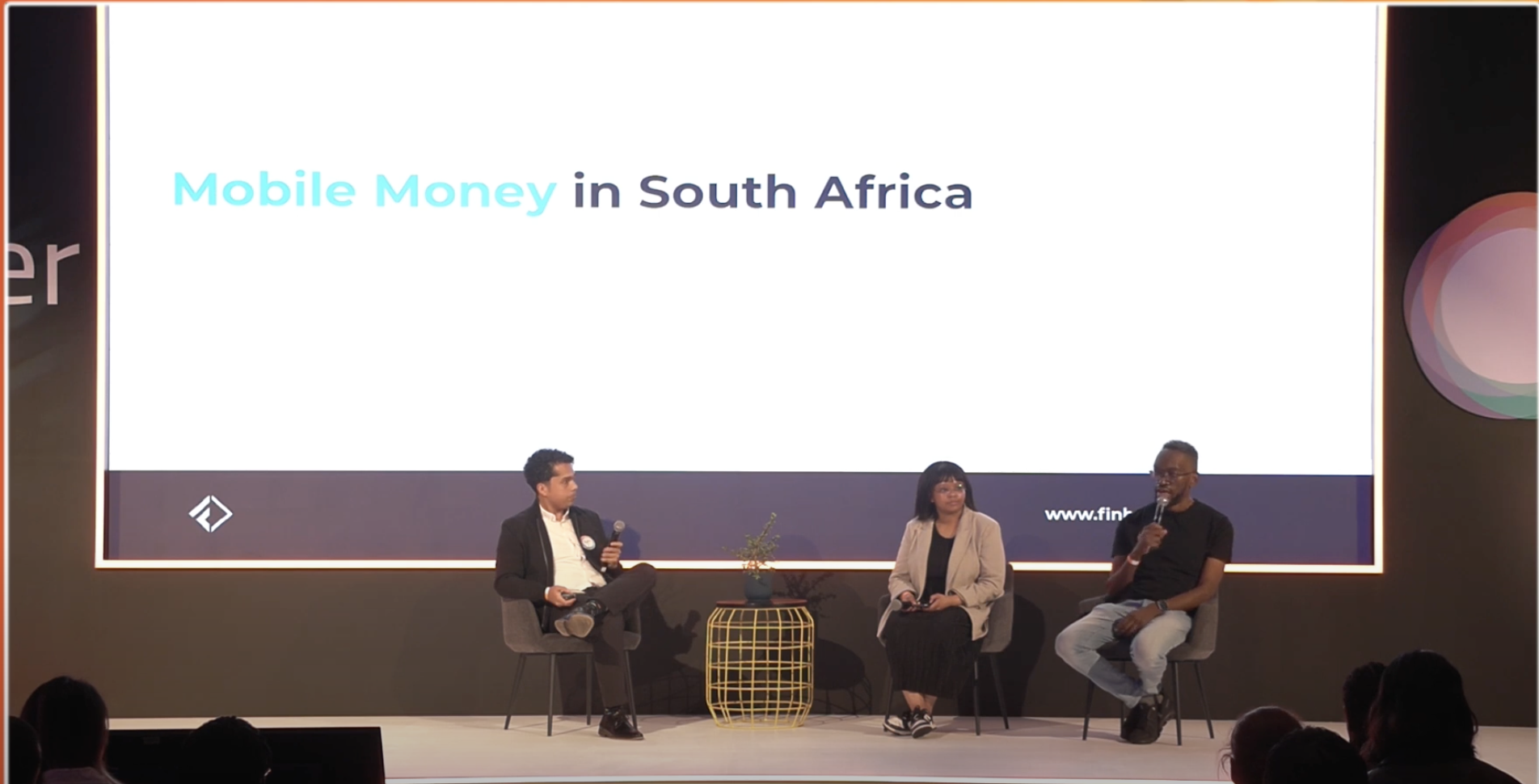
Representing Mandla Money, I participated in a panel discussion with Dr Allan Davids (Director of the University of Cape Town’s (UCTs) Financial Innovation Hub, and fellow UCT MPhil in Financial Technology alumnus, Kungela Mzuku, in which we explored how to drive digital payments and digital inclusion in informal economies, and unpacked why the use of cash remains prevalent in South Africa (watch on YouTube). Official statistics suggest that financial inclusion in South Africa is high (~80%). However, this statistic is somewhat misleading, if viewed out of context because it does not account for whether an individual is underbanked or not. An underbanked individual will have access to a cheque account but not access to credit, and the cheque account typically has a low frequency of use on a monthly basis (e.g. once a month to draw all the cash, pay a single transaction fee and then use cash throughout the month). The underbanked phenomenon is key to understanding why cash remains prevalent and mobile money has been slow to take off.

Cash is Convenient

Cash remains king because it is convenient for consumers. A consumer that withdraws cash after receiving their salary knows that it is universally accepted by merchants. Merchants, informal communities typically accept cash and card payments, but they often will impose minimum spend requirements for card payments in order to offset the high costs of transacting with Point-of-Sale (PoS) devices. Another reason why consumers withdraw all of their cash in one go, post pay day is to avoid paying high service fees from repeated bank account usage. One bulk withdrawal, one service charge, and no further service charges when transacting with cash.

Mobile Money – South Africa vs Zimbabwe

Tackling the elephant in the room, why has mobile money been slow to take off in South Africa, especially compared to Kenya (M-PESA) and Zimbabwe (EcoCash)? There are variations of mobile money in South Africa, including MTN’s MoMo and FNB’s eWallet, eWallet is arguably the defacto leader at present. One can argue that South Africa’s financial services system is developed and sufficiently distributed – payment systems are accessible via different channels – mobile, online, ATMs, retail supermarkets etc. – and a variety of payment methods are accepted by merchants – cards, cash, QR codes. In fact, I would argue that a lot of the retail FinTech innovation has been focused on convenience and not a fundamental enablement of payments e.g. Zapper & SnapScan. Looking at the case of Zimbabwe, between 2007 and 2009, Zimbabwe suffered severe hyperinflation, which resulted in cash shortages (and cash withdrawal limits at ATMS). This, and a lack of trust in the financial system created a conducive environment for mobile money, and the birth of EcoCash. As the old adage goes, necessity is the mother of invention, and at present, South Africa does not have strong enough endogenous push factors towards mobile money as Zimbabwe (and Kenya) did.

Mobile Money v2 and Mandla WhatsApp Wallet

Instead of asking why mobile money has not taken off in South Africa (or other sub-Saharan / emerging economies), perhaps the better question to ask is what financial services solutions can we come up with that allow consumers and merchants to transact digitally, whilst leveraging existing infrastructure and public spaces. We know that hardware is improving and becoming cheaper (Moore’s law). Connectivity is improving, low-cost smartphones are available, open banking APIs are becoming more common.

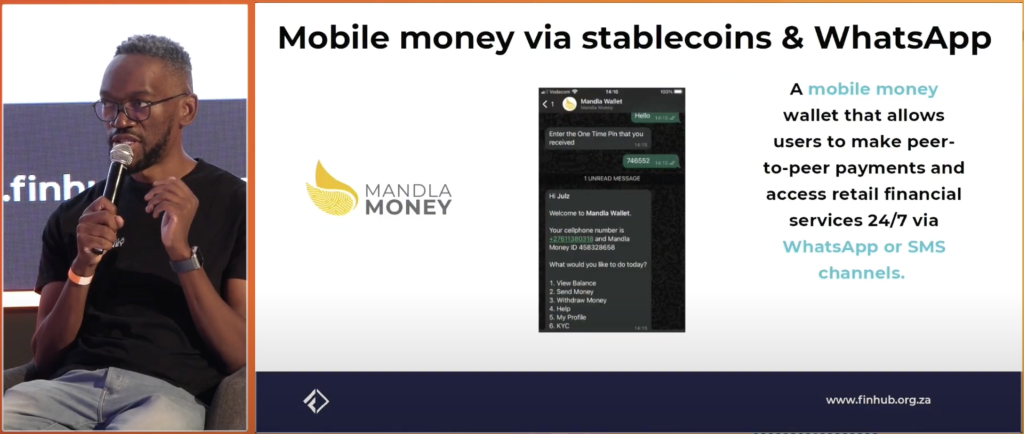
At Mandla Money, our approach to this has been enabling peer-to-peer payments and access to retail financial services via WhatsApp, stablecoins and open banking APIs. At the end of the day, making payments should not feel too different from sending a message (case in point, WhatsApp), and it should not matter which mobile network operator you are with!

Panel discussion – Towards an inclusive cashless society

VAT Included @ 14%

VAT Rate Increase in South Africa and its impact on Software Systems

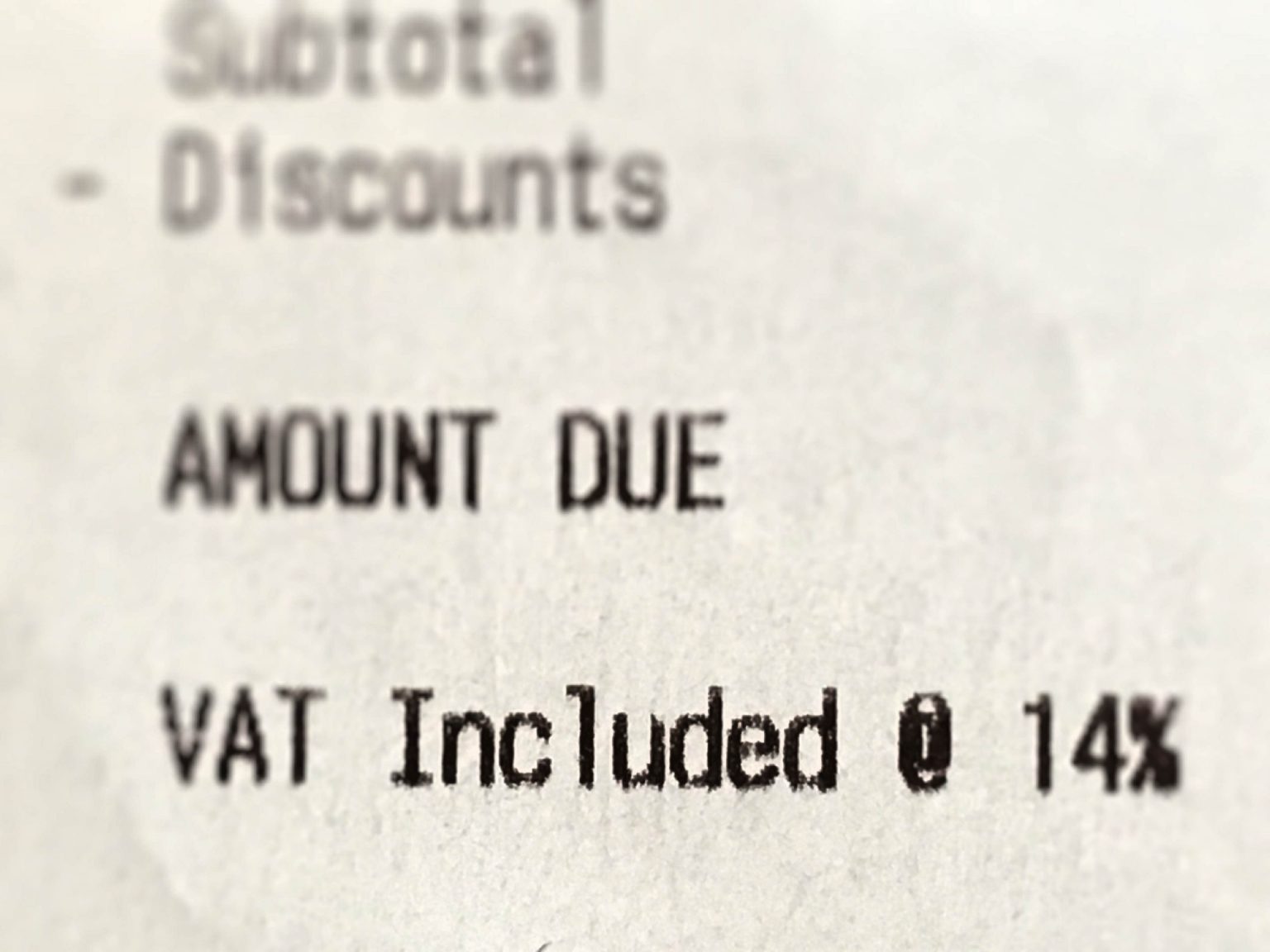
On the 21st of February 2018, the then Minister of Finance in South Africa (Malusi Gigaba) announced the increase of the Value Added Tax (VAT) rate from 14% to 15% during his budget speech, the first increase since 1993. This increase is effective 1 April 2018 meaning businesses that charge VAT for their products/services will need to make the necessary adjustments before then.

I am interested in the effect this increase has on businesses that charge VAT and are heavily reliant on software systems for their sales, billing and reporting processes. The two primary considerations for these software systems that come to mind are – the original Software Design and the resulting VAT related adjustments which I will call the VAT Update Software Project.

1. Original Software Design

I imagine that questions such as “How easy and quick will it be to update the VAT rate” have been asked of development teams following the budget speech. Such questions are related to the original software design – whether a software system was designed to be flexible and future-proof. For example, can a privileged user of the system update system-wide parameters (such as VAT rate) from the system’s front end instead of requiring a change to the source code by the software development team? However, in this particular instance, I can understand how a VAT rate that has not changed in 20 years could have been hardcoded* instead of made configurable (perhaps due to an oversight by the software development team or the result of pressure from business teams/users to turn around development tasks speedily).

2. VAT Update Software Project

Regardless of whether the VAT rate was hardcoded or made configurable, updating it will require some analysis, development/user update and testing which constitute what I have called the VAT Update Software Project (one does not simply search and replace 0.14 / 1.14 / 14% with 0.15 / 1.15 / 15%). Given that the amount of time between the announcement during the budget speech and the effective date of the VAT increase is just under two months, it is most probable that the knee-jerk reaction by many of the affected businesses has been that of commissioning VAT Update Software Projects on the fly. Execution of such project requires agility in undertaking the resulting project management tasks, impact analysis, software development / VAT rate configuration update, system testing and release planning among other activities.

At present, we are just under two weeks from the effective date of the VAT rate increase. This, coupled with the public holidays on the horizon make for some pretty tight project timelines for software teams looking to deliver on VAT Update Software Projects by 1st April 2018. Here’s to holding thumbs for them!


Footnotes
  1. Hardcoding in Software Development means that updates to a variable such as VAT would require a change to the source code by a Software Developer. The opposite of this would be making it configurable by an end user such that they can login to the system and update it perhaps from a Configuration menu.

17 from 17 Flashback

It would seem as if we were just celebrating the start of the new year just yesterday and now it’s March already! I’ve decided to pen a flashback post with a selection of 17 pictures that I captured during the course of 2017 across Zimbabwe, Botswana and South Africa. Enjoy!

Bird Watching (Karoo, South Africa)


Mariner’s Wharf (Hout Bay, Cape Town, South Africa)

Read more

AfrikaBurn 2017 – Desert, Dust and Dance

It has been a little over three weeks ago since I took part in AfrikaBurn, the annual Burning Man like festival in the Karoo.

Describing AfrikaBurn as a festival probably conjures up thoughts of a dance / music. However, AfrikaBurn was so much more than that, it was more of an experience. Some of my best highlights included experiencing a gifting economy in a decommodified society, being exposed to a heightened form of creativity and expression that is otherwise lacking in everyday life and meeting a group of Zimbabweans (my birth country) who drove 41 hours from Zimbabwe to the Karoo in a nineties Land Cruiser!

Below are some pictures which hopefully are a glimpse of the experience.

Tankwa Padstal between Ceres and Calvinia in the Northern Cape Karoo desert of South Africa. A must stop when travelling through the Tankwa Karoo on the R355


Ostrich at Tankwa Padstal

Read more